Drawing from Photos

A quick scroll through social media sites such as Instagram reveals an inundation of hyper-realistic drawings intended to look as realistic as a black and white photograph. To achieve these hyper-realistic drawings, it is usual for photographs to be painstakingly copied in every minute detail. Of course I must give credit to the patience, attention to detail and the skills required in producing such a thorough realistic piece as they do require a great deal of skill to produce. However, I feel some trepidation when viewing these pieces when it appears to be the artists’ main form of drawing. This is because when I view these drawings, I cannot help but wonder where is the representation of the artist? What were their feelings, thoughts, and beliefs? How does this drawing represent their personal artistic style? And what feeling or thoughts is it supposed to elicit in me, the viewer?

Learning Materials
£2.99
Every month


✓ Full access to all of our learning content.
✓ New learning materials added every month.

Guide on drawing proportion

As is common knowledge, portraiture is the representation of a human being’s features, such as the face, head and shoulders or the whole body. However it is necessary when representing the features of the human figure to understand how perception plays an important theme in interpretation of figurative drawing.

Although drawing from life remains the main way of exploring techniques such as proportion and perspective, arguably, in order to master them, it may be necessary to put aside our worry about producing aesthetically pleasing images of immediate and impetuous drawing, rather focus on the academic reproduction of reality before you can achieve a freer and more personal style.

Learning Materials
£2.99
Every month


✓ Full access to all of our learning content.
✓ New learning materials added every month.

Why did I start a life drawing class?

This is one of the many questions I am asked when people come to my the life drawing class for the first time, or other variants such as, ‘so have you been to art college?’, ‘what made you start a life drawing class?’ ‘can you draw though?’. Although I am never upset by these questions, that would feel ridiculous, I am conscious that these questions carry with them the connotations that only those with formal art training should have the opportunity to provide an untutored life drawing class to those interested in art. And it is this implication that I would like to discuss, because I believe this attitude, or even the perception that this attitude exists, that can prevent someone from following their interest in drawing/art just because they don’t have a background of attending art college.

I believe that art should be available for everyone to enjoy and experience, regardless of your educational background. Art should transcend boundaries, to act as a fantastic equalisation, where anyone can enjoy great works of art and the process of making it. Art should bring people together; to discuss their views, thoughts and even their desires, hopes, dreams and impressions, in open discussion. Moreover, it should allow those who gaze upon it to be transported by the artists ambitions.

When looking to the works of Picasso for instance, his famous painting Guernica was a powerful political statement in response to the Nazi bombing of the Basque town of Guernica during Spanish Civil War. Even in today’s society, art can be used by anyone to express themselves in whatever way they feel, owing to this, art posted on social media sites was used by the masses in response to the fire of Notre Dame.

Art then like classical music should not be viewed as highbrow; to be reserved for those few who have attended art school, or who have cultivated their skills in Florence. Certainly any institution that develops your knowledge and skills in art is without question significant, yet I feel it is also important to ensure that the opportunity for the enjoyment of art is available to everyone, especially those who have not attained formal art credentials. This is because I understand how  an inner interest in art can take secondary position in consequence to educational or career ambitions.

Therefore I believe life drawing is one way to break down any perceived barriers, by demonstrating that snobbery around art does not exist, as it is an opportunity that is available to everyone. In other words, if you are worried about coming to a nude figure drawing class because you feel you lack formal training or credentials, please do not allow this apprehension to hold you back from enjoying the universal experience that is art.

Nichola.

Leonardo Da Vinci's : A life in Drawing Exhibition at Manchester Art Gallery

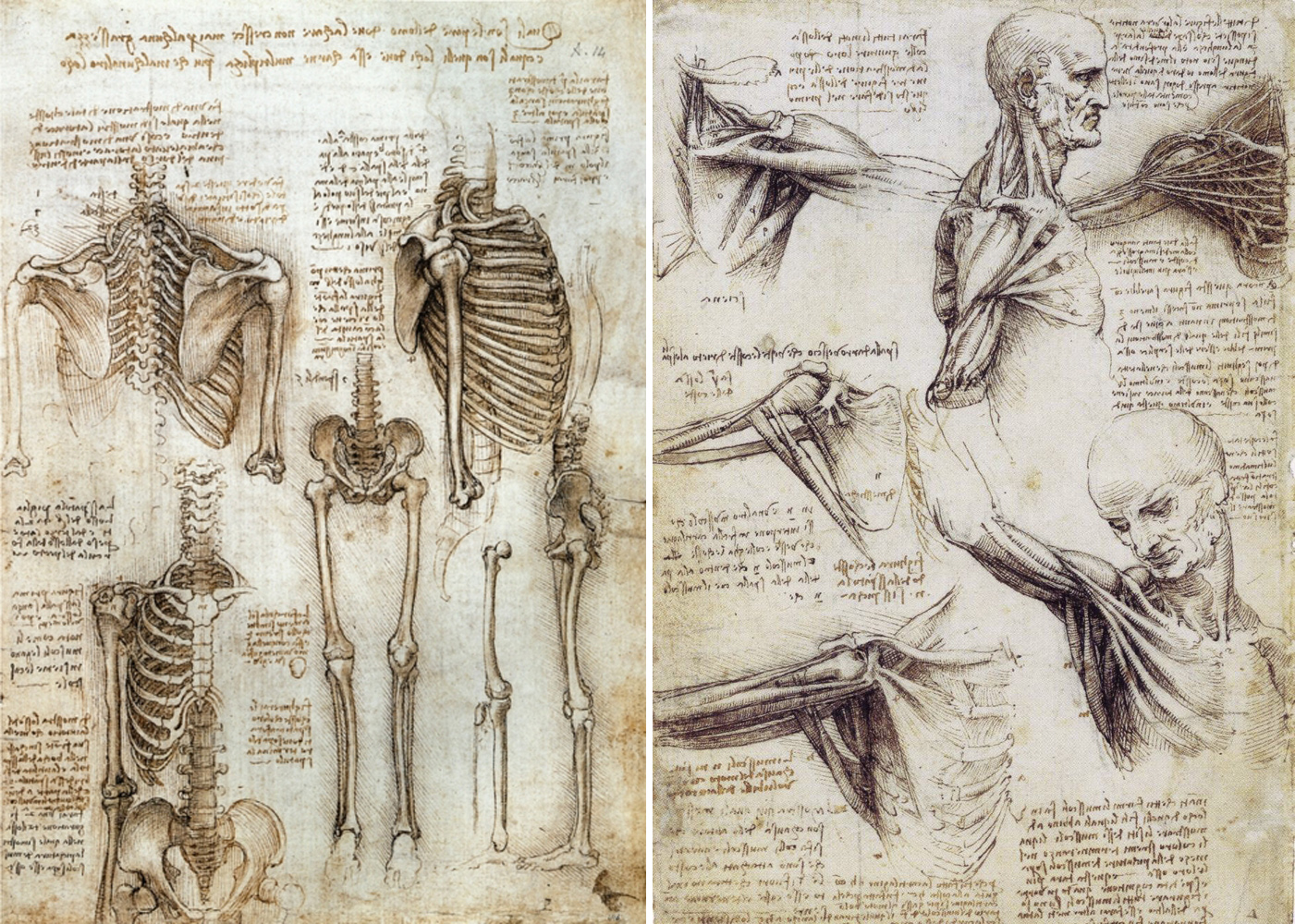
Last week I went to the Manchester Art Gallery to explore the ‘Leonardo da Vinci: A Life in Drawing’ exhibit. This exhibit, part of a nationwide exhibition, has been held to celebrate the life and art work of Leonardo da Vinci; marking the 500th anniversary since his death. The gallery displayed twelve drawings of the body by Leonardo da Vinci, including anatomical studies; male and female studies; drapery; and models in action, on loan from the Royal Collection.

Leonardo-da-Vinci-the-Anatomical-Artist2.jpg

The exquisite drawings on display showed just why Leonardo da Vinci is known as the Renaissance master, his works showed his profound understanding of human anatomy. By intensely studying how the human body is supported by the skeleton and musculature, Leonardo da Vinci was able to depict the human figure as it is in nature. Looking at the drawings on display Leonardo da Vinci appears to have had a fascination with the shoulder joint and the foetus.

According to many historians Leonardo da Vinci took his fascination of the human anatomy to the next step, and at some point started dissecting bodies, allegedly dissecting 30 in total. It is clear from his drawings that Leonardo da Vinci had an exceptional understanding of the inner workings of the human body. Just like Leonardo, life drawing requires the artist to be familiar with the internal structure of the model so we can portray in an appropriate and convincing way the external forms of the body. Although I am not asking you to dissect a body, picking up a book on the anatomy, studying the muscle groups and the skeleton is a very useful step in understanding form, posture and position in relation to the movement of the bones, joints and muscles.

Leonardodavincianatomy-43.jpg

However as useful as anatomy books are at creating an awareness of muscles, joints and the skeleton, it is through careful and prolonged observation of the human body that our understanding of what constitutes elements of movement truly deepens. This is were life drawing is so important, observing a nude figure in action; changing position in the quick gestural poses; or observing sustained positions enables the artist to become aware of the muscles contracting and connecting; and the movement of the skeleton such as the spine and pelvis, as the model preforms a movement. Indeed it is through life drawing, that artists are able to practise their skill at defining the nude figures external appearance, enabling them to transfer this skill to realistic portraits, caricatures or even sequential art.

I really appreciate you reading my words, there's no charge, but if you want to offer a little support, click on the button below to buy me a coffee or two!