

Beyond the Horizon: Unlocking the Two Powerful Meanings of Perspective in Art
Have you ever stood before a breathtaking Renaissance painting and felt you could step right into the scene? Or have you looked at a modern abstract piece and been deeply moved, while a friend was left completely cold? The secret behind both experiences lies in a single, powerful word: Perspective.
In art, "perspective" is a chameleon of a term. It refers to both the technical tricks artists use to create the illusion of depth on a flat surface, and the unique lens of experience through which they see—and we interpret—the world. Let's unravel these two meanings and discover how they shape everything we see in art.
The Technical View: Linear Perspective and the Illusion of Depth
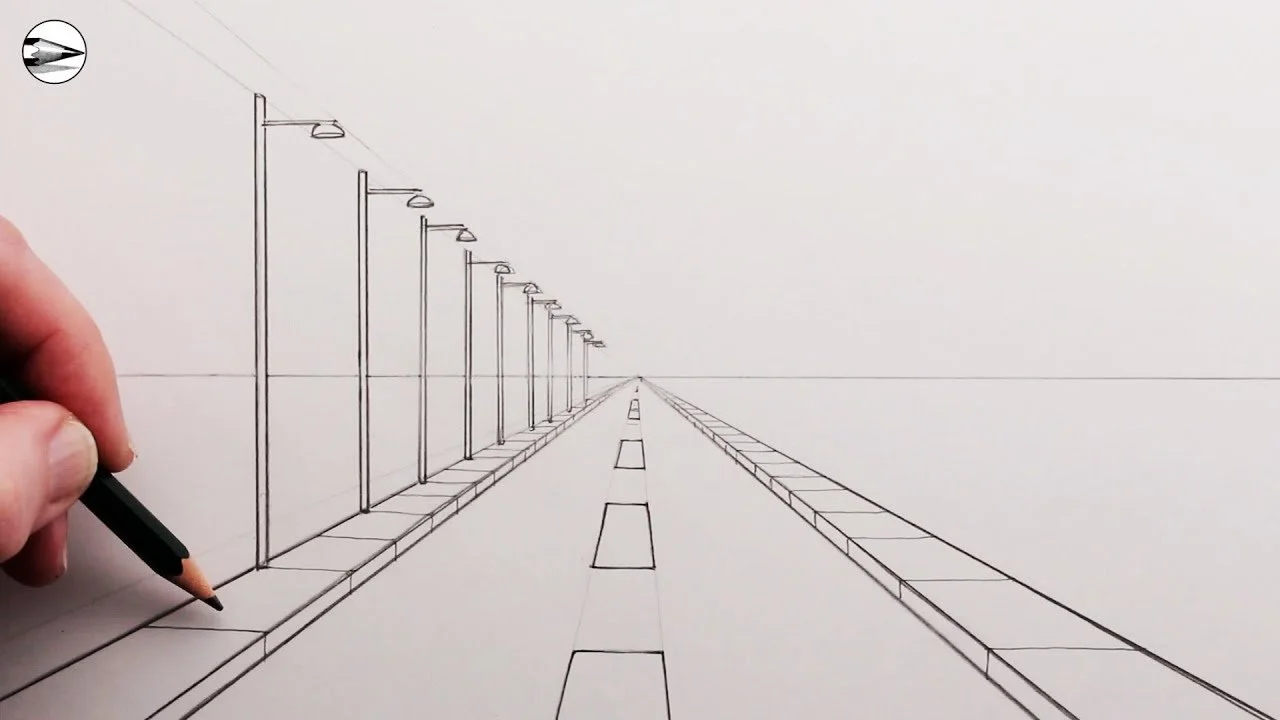
This is the "how-to" of perspective—the mathematical and geometric system that gives a two-dimensional artwork a sense of three-dimensional space.
The Renaissance Revolution: Before the 15th century, artworks often looked flat. Figures were sized by importance, not by their position in space. Then, artists like Filippo Brunelleschi formalized linear perspective. The core principle is simple: parallel lines receding into the distance appear to converge at a single point on the horizon called the vanishing point.
Why It Matters: This technique was revolutionary. It allowed artists to create stunningly realistic scenes, making viewers feel like they were looking through a window into another world. From the architectural precision of Da Vinci's "The Last Supper" to the sprawling cityscapes of Canaletto, linear perspective became the foundation for Western art for centuries.
Quick Tip for Artists: To see this in action, look down a straight road or railway track. Notice how the parallel sides seem to meet at a point far in the distance. That’s your vanishing point!
2. The Personal View: The Artist's and Viewer's Lens
Beyond technique, perspective is also deeply personal. It's about point of view—the internal framework of beliefs, experiences, and emotions that an artist brings to their work, and that we, as viewers, bring when we interpret it.
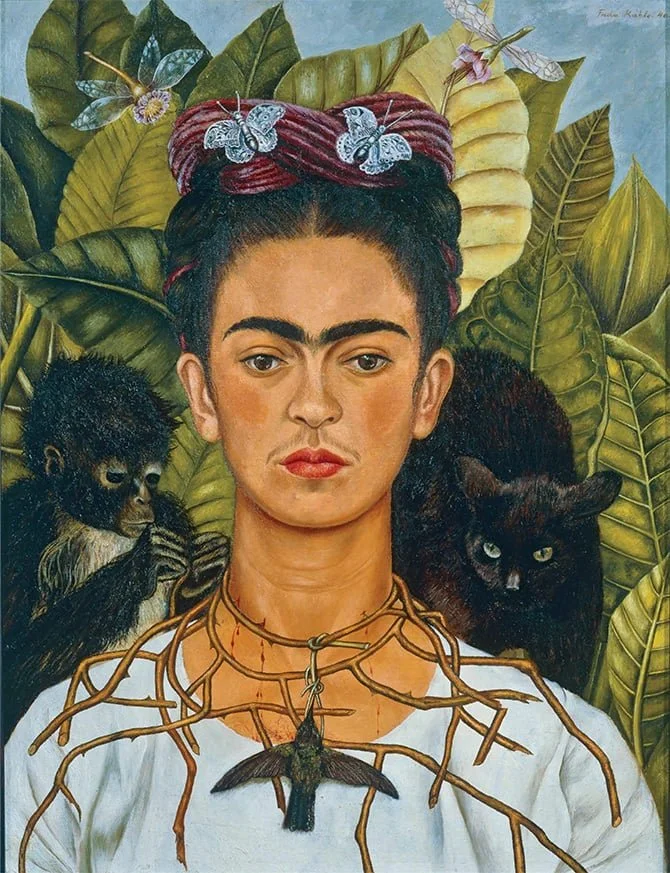
The Artist's Perspective: An artist's work is a filter for their soul. Frida Kahlo's self-portraits are steeped in the perspective of physical pain and cultural identity. Banksy's street art is shaped by a perspective of political rebellion. Their individual experiences directly dictate their subject matter, style, and message.
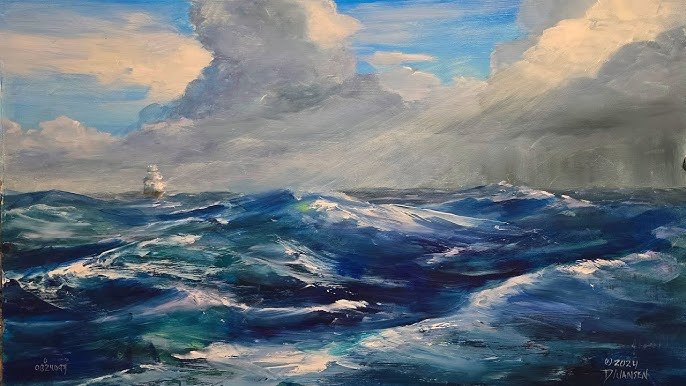
The Viewer's Perspective: We are not blank slates. Your personal history, mood, and cultural background actively shape how you see art. A painting of a stormy sea might feel terrifying to one person who fears the ocean and exhilarating to another who is an avid sailor. This is why art is so powerfully subjective; there is no single "correct" interpretation.
Where the Two Meanings Meet
The true magic happens when technical and personal perspective intertwine. Imagine two artists painting the same street scene.
Artist A uses a low vanishing point, making the buildings loom tall and powerful, perhaps reflecting their feeling of awe in the city.
Artist B uses a high vanishing point, looking down on the scene, making the people and cars seem small and anonymous, perhaps commenting on urban isolation.
Both used the same technical skill (linear perspective), but their personal perspectives led them to use that technique in different ways to evoke completely different emotions.
Conclusion: A Deeper Appreciation
Understanding perspective in all its forms is key to a richer relationship with art. It allows us to appreciate the sheer skill behind a masterful landscape, while also empathising with the unique human experience that motivated its creation.
So, the next time you encounter a piece of art, ask yourself two questions: "How did the artist create this sense of space?" and "What is this artist trying to tell me about their world, and why does it make me feel the way I do?" In the answers, you'll find the beautiful, complex dialogue between the artist's hand, the artist's heart, and your own.
Reclaiming the Narrative: Sexuality as a Tool for Female Empowerment in Art
For centuries, the female form was a central subject of art, but rarely was it a vehicle for a woman's own voice. Female sexuality was largely portrayed through the male gaze; filtered through the desires, fantasies, and ideals of male artists for a male audience. From the passive Venuses of the Renaissance to the objectified nudes of the Modern era, women were seen but seldom heard. However, a profound shift began in the late 20th century, as female artists seized control of their own narratives, using sexuality not as a subject for consumption, but as a powerful tool for empowerment, critique, and self-definition.

The Feminist Foundation and the Body as Canvas
The catalyst for this revolution was the feminist art movement of the 1960s and 1970s. Rejecting the patriarchal structures of the art world, pioneers like Judy Chicago and Carolee Schneemann began using their own bodies as a primary medium. This was a radical act: it asserted that a woman's body was her own territory, a site of personal and political expression. By making their physical selves the canvas, they challenged the traditional separation between the artist (traditionally male) and the muse (traditionally female), declaring that a woman could be both.
Subverting Stereotypes and Claiming Agency
The legacy of these pioneers is evident in the work of seminal artists who have continued to explore and expand upon these ideas.


Cindy Sherman uses photography and performance to deconstruct the stereotypes surrounding female identity. In her iconic Untitled Film Stills, she doesn't just portray characters; she portrays the cliches themselves. By controlling every aspect of the image—the costume, the pose, the lighting—she exposes the artificiality of femininity and demonstrates how identity is a construct, thereby robbing the male gaze of its power to define her.
Tracey Emin draws power from vulnerability. Her most famous work, My Bed, presented her own unmade bed in the aftermath of a depressive episode, littered with intimate, taboo objects. By placing her raw, unvarnished personal life on display, she defiantly rejected ideals of female propriety and passive beauty. She wasn't an object to be looked at, but a complex subject sharing her experience on her own terms.
Marlene Dumas explores the female form with a raw, psychological intensity that defies objectification. Her paintings are often erotic, but they are not idealized. They are fleshy, messy, and emotionally charged, depicting desire, power, and anxiety. In works like The Visitor, she reclaims the nude not as a passive form, but as an active, complex being, challenging centuries of art history where women were rendered as placid objects.
A Note on Male Artists and Intersectional Voices
It is true that male artists like Robert Mapplethorpe and Jeff Koons have explored female sexuality. However, the context and reception are fundamentally different. While Mapplethorpe's work challenged norms of homoeroticism and beauty, his depictions of women (like Lisa Lyon) can be seen as a continuation of a formalist tradition, sometimes critiqued for its cool, objectifying distance. Koons's explicit works with his then-wife Cicciolina sparked debates about whether they were a celebration of sexuality or a high-art replication of pornographic tropes. The key distinction lies in agency: female artists are widely understood to be reclaiming their own bodies and narratives, a political act of self-possession.
Furthermore, the conversation is increasingly being enriched by Black, Indigenous, and artists of colour, such as Mickalene Thomas and Shirin Neshat, who explore how race, culture, and religion intersect with female sexuality and empowerment, adding vital layers to this ongoing discourse.
An Evolving Dialogue
The use of sexuality in art by women is not a monolithic movement; it is a diverse and evolving language of empowerment. It is about claiming the right to be complex, vulnerable, powerful, desiring, and undesirable on one's own terms. By fearlessly exploring the depths of female experience, these artists have not only created a new space for women in art history but have also empowered all of us to see the female body not as an object, but as a source of profound subjectivity and strength. The narrative, once written by others, is now being authored from within.
Suspense on Paper: A Hitchcockian Life Drawing Masterclass
What happens when you cross the disciplined observation of life drawing with the masterful suspense of Alfred Hitchcock? This Halloween, we discovered the answer.
Our studio traded quiet contemplation for palpable tension in a special session dedicated to the Master of Suspense. We set out to draw not just the human form, but the very essence of fear, intrigue, and cinematic drama.
The Scene: From Studio to Soundstage
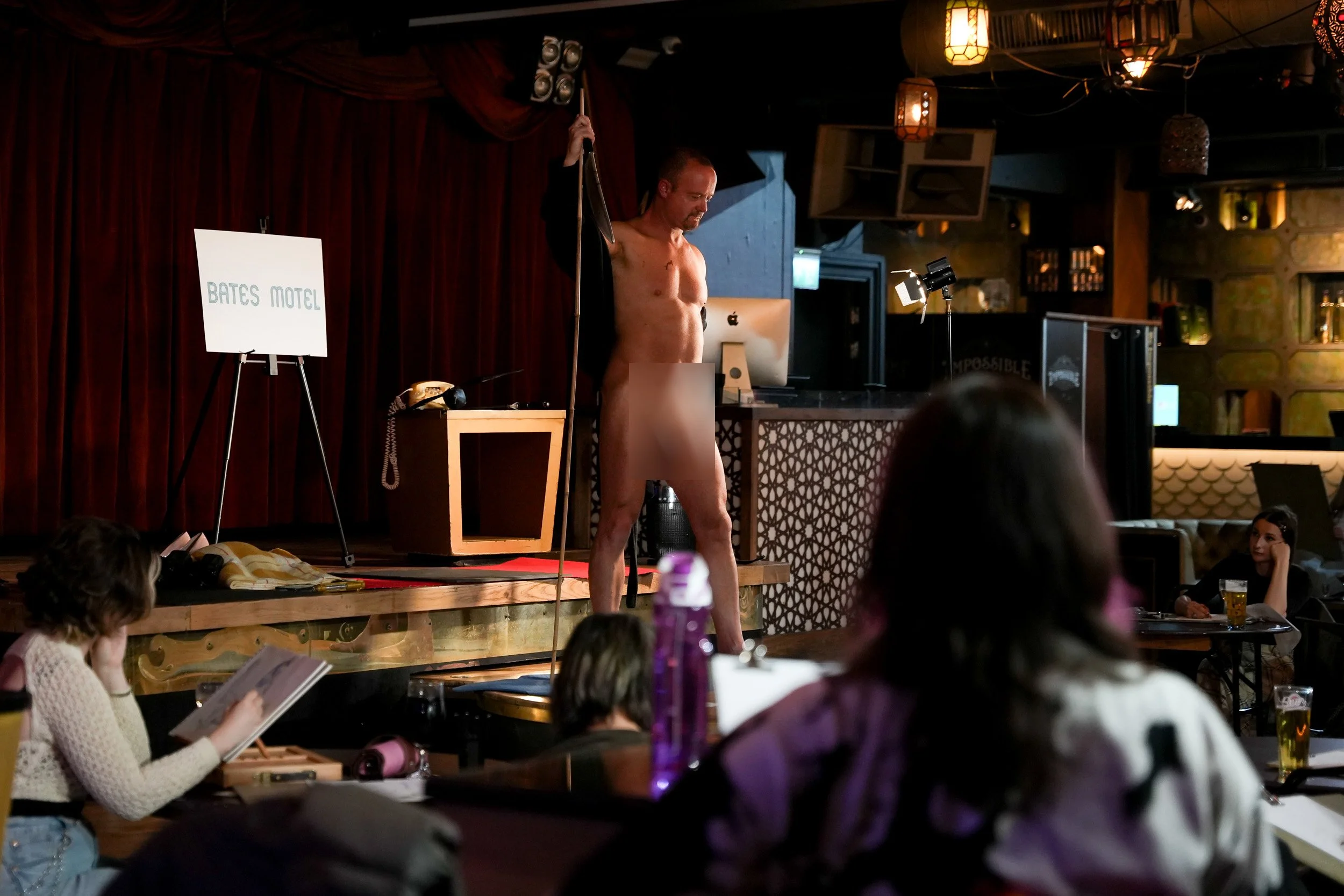
Gone were the classical drapes and neutral backgrounds. In their place, an atmosphere charged with narrative potential. Our model became an actor, and their poses were frozen scenes inspired by Hitchcock's greatest hits. This wasn't a class about perfect anatomy; it was a masterclass in visual storytelling.


The Poses: Capturing Cinematic Terror
"The Birds": Frenzy in Motion. Next, a modern Tippi Hedren was frozen in a moment of frantic escape. Her elegant suit and coiffed hair were a stark contrast to the wild energy of her pose. This was a challenge in capturing movement and chaos. Artists had to work quickly with gestural lines to translate that raw, bird-attacked terror onto the page, a whirlwind of motion against a static background.
"Rear Window": The Art of Voyeurism. This pose was a homage to the spleenful and psychologically charged movie Rear Window. The model, poised as if peering through an unseen window, allowed artists to explore the dynamics of the gaze. The focus was on the intensity of the look and the contrast between the safe, intimate interior and the mysterious, dangerous world outside.
"Psycho": A Study in Vulnerability. Our final pose had our model channel the doomed Marion Crane, posed in a way that evoked the stark, unsettling silence of the Bates Motel. The challenge for artists was to capture more than a figure; it was to convey a character's fear and isolation through the curve of a spine and the tension in a shoulder, using shadow to hint at the menace just outside the frame.


The Artistic Takeaway: Drawing the Invisible
The true lesson of the evening went beyond the figure. We discussed how Hitchcock used lighting not just to illuminate, but to isolate and accuse. We analysed how composition could build a feeling of dread, trapping a character in the frame. The goal was to capture the psychological weight of a moment, the suspense that lies in a shadow, the story hidden in a glance.
